
Have you ever thought about what difficulties our spine sometimes faces and what stresses it experiences? Hours spent at the computer or phone, too intense workouts, and falls lead to an enormous load on the spine.
As you know, the spine has "discs" between the vertebrae. These are fluid-filled "shock absorbers" that prevent bone from rubbing against bone. Because they have no blood supply, the discs are powered by osmosis. Thus, movement of the spine is vital to maintaining and nourishing these structures to prevent excessive wear and tear on the spinal column.
This article presents information about special spinal decompression exercises recommended by a Sydney chiropractor from the Physical Therapy Center. Also, here you can watch a video on how to properly perform these exercises, which will help to relieve discomfort and tightness and improve blood circulation. Read the description of the exercises in the article below.
1. Block for the back.

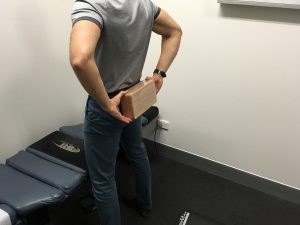
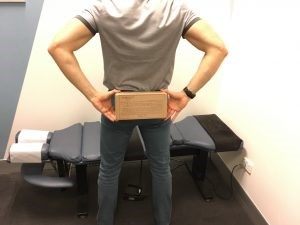
The task of the block for the back is to relieve all muscle tension. When you have pain in your back, the body may resist fully relaxing the back over the block. Do not hurry! With each exhalation, try to relax your pelvic floor muscles, hip flexors, and lower back to begin to feel the stretch in your spine.
Using such a block for the back is a simple and effective way to perform spinal decompression. Passive lying on the back on the block stretches the lower back, simultaneously stretching the compressed wall of the disc and passively lengthening the tense local muscles and ligaments that bind and contract the spine downward. This method stimulates pressure changes in the intervertebral discs by alternately discs loading and unloading within their physiological range. The physical separation of the spinal segments also counteracts fluid loss and abrasion of the intervertebral discs.
2. Pelvic stone.
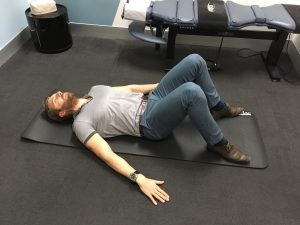
After you have completed the first exercise, your back may be a little sensitive, and this exercise may be a little painful. But that's until you get used to it. A pelvic stone is a gentle way to relieve discomfort in the lower back.
3. Rocking the knees.
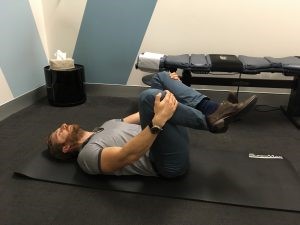
Rocking your knees is a great way to regain the range of motion in your lumbar flexion. This will help relax the erector spinal psoas muscles in the lower back and make it easier for the intervertebral discs to absorb fluid.
4. Reverse twist.
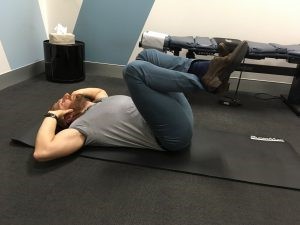
Since compression in the spine builds up throughout the day, the best time to do these exercises is at the end of the day. You can do them in the morning too, but they will be less effective when you wake up. Ideally, these exercises are best done between 12:00 - 15:00 (12:00 p.m. - 3:00 p.m.) or shortly before bedtime.
This article is only informative. Consult a doctor if any severe pain in the spine occurs. Use bandages TM MedTextile for playing sports and unloading your back. Ask for the bandages MedTextile TM at the pharmacies of your city.
